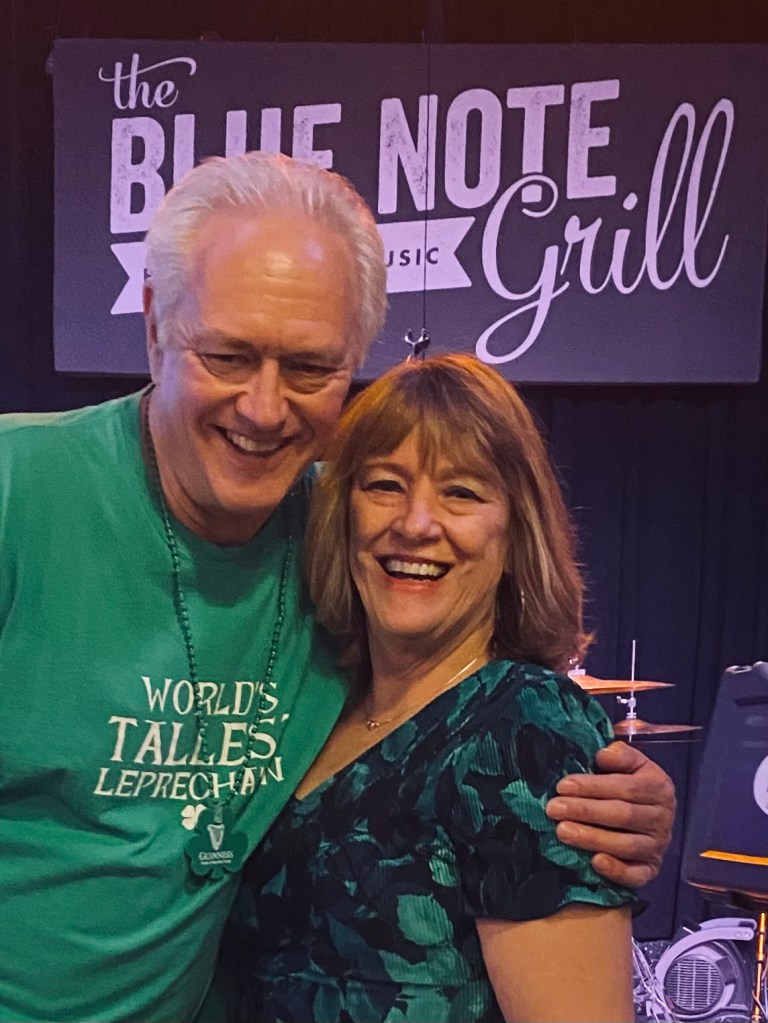
Last Tuesday afternoon around five o’clock, my son, Ross called on his drive home from work.
“What ya’ doin’?” he asked.
Between mouthfuls of turkey burger and salad, I told him, “Eating dinner.”
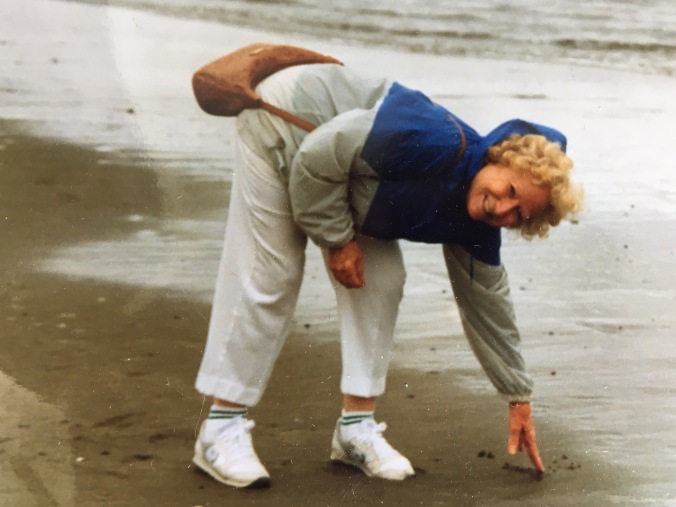
“Oh, you’re eating early like a senior citizen,” he said. I could hear a lightness in his voice and imagined him smiling. Over the past few years, he and his older brother, Brooks don’t hesitate to point out ways my behaviors remind them of their grandmothers. I’ve thought about that myself as I remember my mother-in-law, Mary Dell and how she’d eat in her living room on a t.v. tray in front of the evening news. Now, I find myself doing the same.
“Yeah, I am. But it’s because I’m going dancing tonight at the Blue Note Grill (BNG) Blues Jam. I don’t like eating close to that time.” I wasn’t trying to be defensive, but I needed him to know the whole story. Yes, I’m a senior citizen but I’m more than that.
I thought about a book that’s been a companion as I’ve grown older: Ageless Soul: The Lifelong Journey Toward Meaning and Joy by Thomas Moore. He’s a psychotherapist, former Catholic monk, lecturer, and bestselling author known for writing popular spiritual and depth-psychology books. For me, reading and thinking about his perspective opens up new possibilities and a healthier way of moving through my later years. I’ve had some good examples of family members and friends who’ve aged well. Adding in new wisdom based on Moore’s faith and years of experience as a therapist deepens the well of wisdom.
In Chapter 2 of Ageless Soul, “Old Bodies, Young Souls” I can identify with Moore saying he forgets his age of seventy-six “because I always feel like I am forty.” He explains that he doesn’t deny his age it’s just that he has a “strong youthful component” in him. He says, “we all have a young person and an old person deep in our makeup. You may feel the youth suddenly come to the foreground, full of energy and ideas, and then the old person may rise up, wanting more order and tradition.”
When I first went to the Jam at BNG I knew no one. I was intimidated by dancers out on the floor “freestyle dancing” which we called “fast dancing” when I was a teen. I was comfortable with social dancing with a partner as I’d done for years at the Sunday night dances at the Elk’s Lodge. Those patterns of East Coast and West Coast Swing were predictable and always with a partner. Eventually, I had to give in and get out on the dance floor at Blue Note, letting go of my self-consciousness. Fellow dancers were friendly and encouraging and helped me gradually become more comfortable. Over time, I could dance “like no one was watching.” I felt younger than I did at 18 when I was too shy for that.
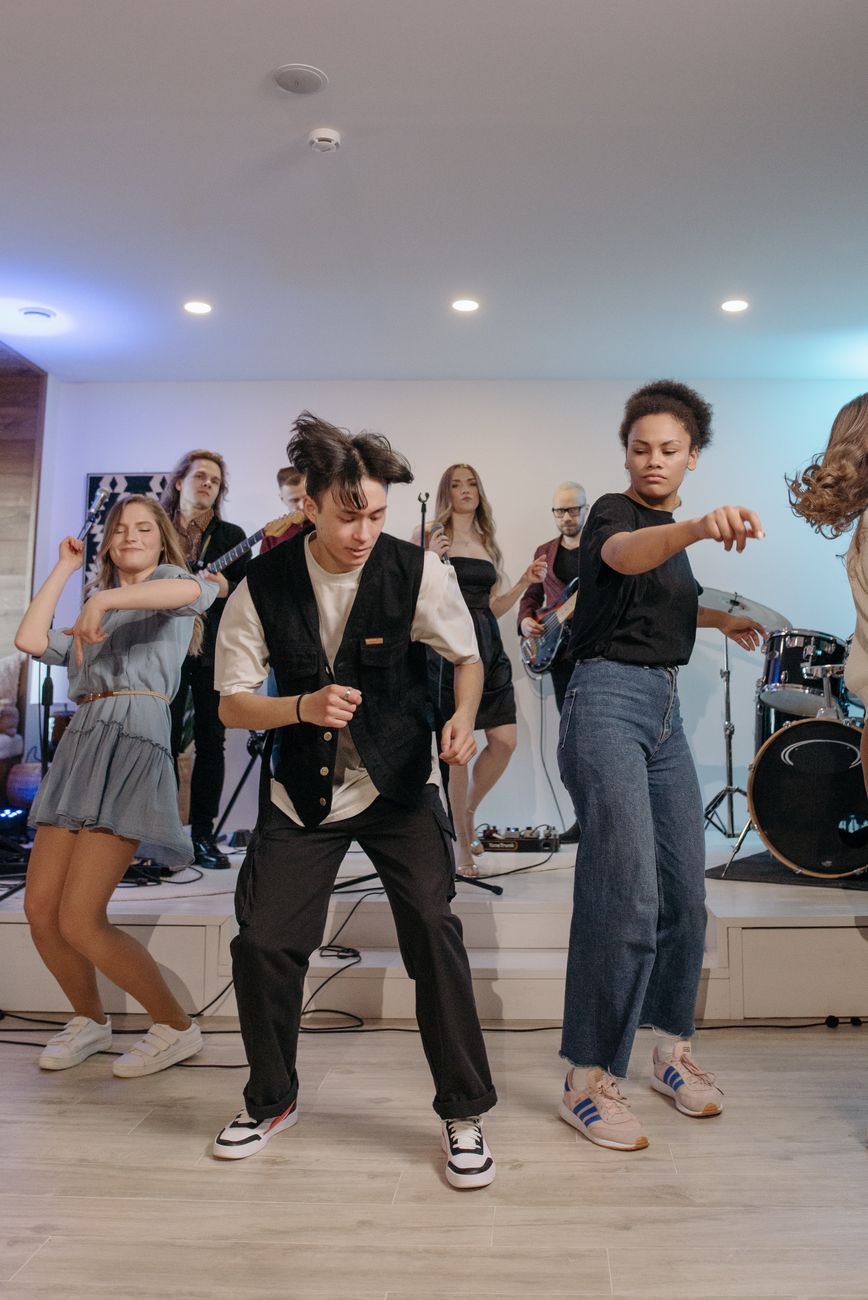
Moore says that in our culture, when people think of keeping their youth as they age, they often think too “physically, materially, and literally.” He points out that they “get face lifts but not personality lifts” and it may be more beneficial to “stay young from the inside out.”
I plan to dance and accept other life invitations for as long as I can. One day I may not be physically able to dance. But even at that point, Moore says “You can age well only if you retain much of your youthful enthusiasm and imagination, even as you adapt to aging.” He encourages readers to remember things they loved, projects that weren’t finished in their youth that they may be able to return to in their senior years. I may have to do more with those imaginary friends I had as a girl; they were great company and I can continue those stories even if I can’t take them dancing.
My hope for you, is whatever age and stage of life you’re in, you will fully engage both your youth and your increasing age. That boy or girl that was alive inside of you when you were young is still there. Nurture that youthful spirit while accepting and leaning into the wisdom from your experiences in life.
Best to you,
Connie