Recently my friend and her husband took a road trip out west. She shared lots of photos along the way and I especially enjoyed the ones of the red rock formations in Moab, Utah. I haven’t been there but the rocks reminded me of Sedona, Arizona. I could appreciate the startling beauty that’s so different from our home in central North Carolina — green with lots of trees and blue-gray water of lakes and ponds. Looking at my photos from Sedona, I’m reminded of what that period of my life was like that I described in the post Sedona: A Serendipitous Journey
“Taking yearly pilgrimages started after my serendipitous journey to Sedona. What made that such a pivotal point, was the juxtaposition of entrapment with freedom. During the preceding eight months of cancer treatment, I’d been closely monitored; by the clinical trials research company I worked for to see if I was able to do my job; by my family and friends to see how I was physically and emotionally holding up. While my employer was difficult and my family and friends well-meaning, both made me want to escape to a place where I was free to move about, unnoticed.”
That red-rock landscape will always symbolize freedom for me. At 46 years old, I needed to be able to breathe
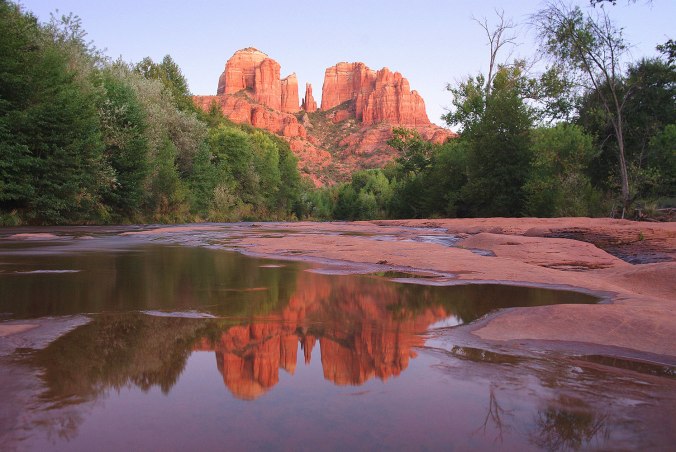
Years ago I read a story of a pastor asking a woman, “What is saving your life now?” He wasn’t trying to get at the central message of the Gospel– of the Christian belief of Christ saving our lives through His death on the cross. Rather he was searching for what activity was putting life into her. After I heard that, I thought about how my experience in Sedona opened up a new world for me. In my post Saved by Sedona this is how I described my first solo journey there:
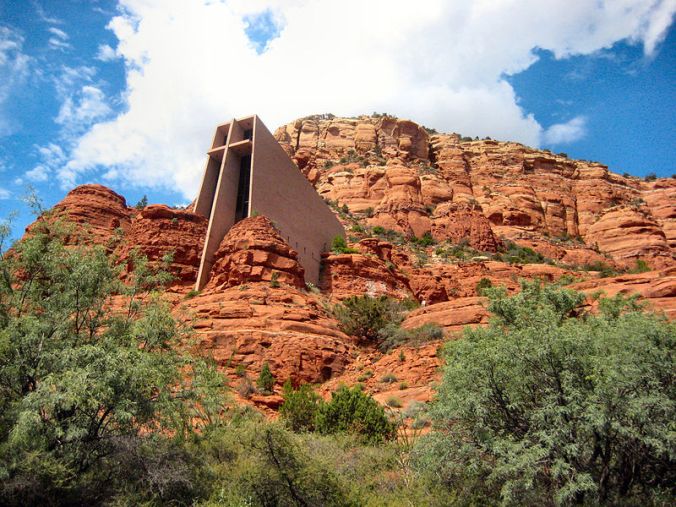
“While the amount of time I was in Sedona was brief, its impact was long-lasting. By traveling alone, I was able to move about freely without the constraints of a schedule or negotiating what-are-we-going-to-do next, or having constant conversation with companions. Instead, I could stand in the shadow of Cathedral Rock, wander down a dirt road just to see where it led, and sit in meditative prayer in the Chapel of the Holy Cross. Sedona became a template for how to renew myself by being alone and present with God. Later, I made taking a yearly ‘pilgrimage’ a spiritual discipline, feeling the benefit of going away to be renewed and gain perspective on my life.”
On the one night I spent in Sedona before I drove to the Grand Canyon the next afternoon, I followed the advice of a shopkeeper in town.
“Go to the airport to watch the sunset,” he said. “It’s a magical place.”
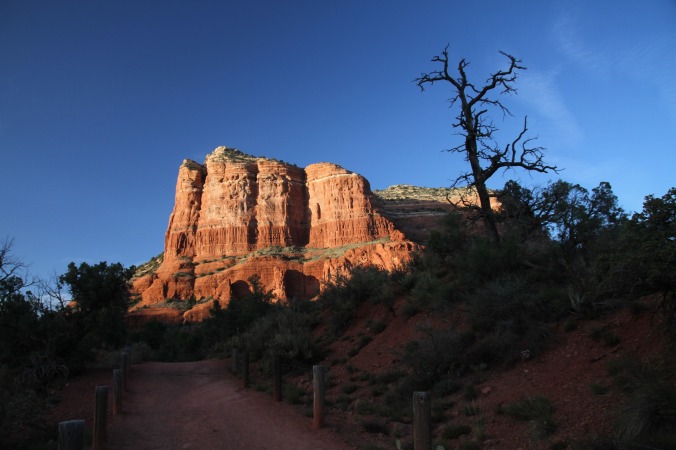
When I arrived, there were cars parked with people sitting on the hoods ready to enjoy nature’s theater-in-the-round drama of sunset. I followed their lead and sat on top of my rental car, speaking to others nearby. The fading light shone on different facets of the striated red rocks. A collective of “oohs” and “aahs” went up from the crowd. I’d never witnessed such a fantastic ending of a day.
I realized that night how few sunsets I’d observed in my life. Most wouldn’t have been as glorious as that one under that big Arizona sky, golden light on red rocks. But part of the magic was just being present and observing something I was too busy to see most of the time.
Now, remembering Sedona, I’m filled with gratitude for the grace of that trip. I had no idea that was just what I needed. Later, I learned that people flocked to that place because it was believed to have special healing power, vortexes of energy that were felt but scientists hadn’t proved. From my personal experience, I certainly felt lighter, like something in me was being healed; my energy was replenished after the trials of going through breast cancer treatment while maintaining my position in a toxic work environment.
I hope I’ll always remember the significance of my journey to Sedona and the impact it had on my life.
I wonder, do you have a place where you were surprised by grace, of being refreshed when you didn’t expect it? How do you keep that memory alive?
Blessings to you,
Connie

