During this season of Lent, the 40-day period for Christians between Ash Wednesday and ending before Easter Sunday, I was drawn to reading a book that has been on my shelf: A Shepherd Looks at Psalm 23 by Phillip Keller. I’ve had it for years but never felt the pull to read it. Looking back at pictures from my trip to Scotland, the familiar site of sheep grazing awoke a desire to learn more about what it was like to raise that type of livestock. I grew up on a farm with cows, pigs, and chickens, but we never raised sheep. With so many references in my Christian faith to Christ being the Good Shepherd, it seemed to be the right time to learn more about Psalm 23 from a shepherd’s point of view.
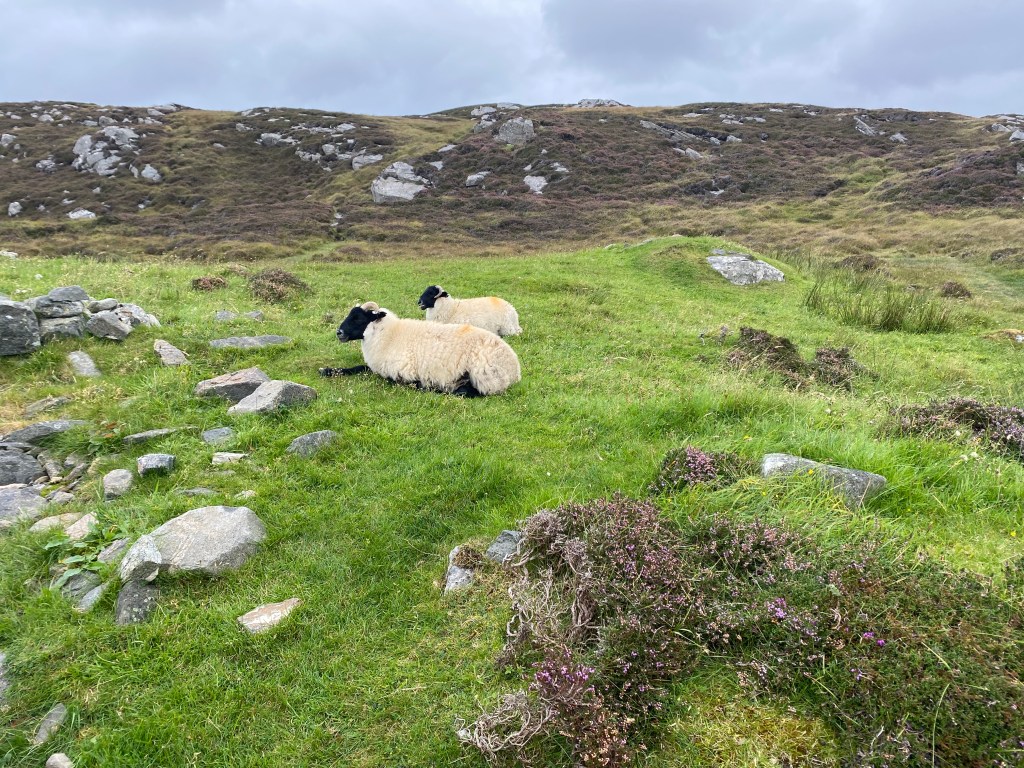
The author of the book had grown up in East Africa and been involved in sheep farming there and then trained as an agrologist at the University of Toronto. He was involved for many years in raising sheep. I trust his authority as a scholar and as someone who has hands-on experience with the day-to -day duties. Seeing them as a casual observer, you assume it would be easy.
Keller quickly dispels my naive assumption saying, “Sheep do not “just take care of themselves” as some might suppose. They require, more than any other class of livestock, endless attention and meticulous care.” He realized when he bought his first flock that as their owner he’d have to continually lay down his life for them if they were to flourish and prosper.

He contrasts the care he took to be sure his sheep grazed the best grasslands with the neighboring rancher. That owner’s stock were always thin, weak and riddled with disease and parasites. I was impressed by how continuously the attentive shepherd had to check each of his lambs for signs of disease, for the impact of insects that could devastate the herd. Keller says that Psalm 23 might be called “David’s Hymn of Praise to Divine Diligence.”
I remember a hymn we sang when I was a girl growing up in Shallow Well UCC: “Savior, Like a Shepherd Lead Us.” Like so many songs from childhood, some of the words I knew from frequently singing that hymn and had a superficial understanding of it referring to Christ as a Shepherd. There were pictures in our Sunday School classes that showed him holding a lamb, a comforting image for a child. Now, I see the hymn was written for a children’s hymnal in 1836 by Dorothy A Thrupp, a British woman who likely saw sheep in the countryside. Now, the second line comes to life after reading Keller’s description of caring for his flock:
“Much we need Thy tender care”
Keller describes the behaviors of sheep in general and of certain personalities of individual lambs. He notes that “it’s no accident that God has chosen to call us sheep. The behavior of sheep and human beings is similar in many ways.” He describes his flock and their tendency toward mass mind or mob instincts, fears and timidity, stubbornness and stupidity. Often they would repeatedly put themselves in situations where they were stuck in brambles or near steep drop offs or wander away from the other sheep losing the protection in numbers. The alert shepherd would lift them out of those brambles with his crook. If the sheep were threatened by a predator ready to pounce, he skillfully protected with his rod that he maintained in his hand.
A tender description of the protection the sheep experience with the shepherd’s crook is when the shepherd places it on the side of the sheep. Sometimes it’s used to guide the flock on their journeys to the higher grasslands, and sometimes it’s a way of saying to the animal, “I’m with you.” The sheep are comforted by the shepherd’s presence, whether in the day or at night when predators are lurking.
The beginning of the second verse of Thrupp’s hymn comes to life with that understanding of sheep:
We are thine, do Thou be friend us,
Be the guardian of our way
Keller describes a year in the life of sheep ranching. I had no appreciation of what that type of work involves. Through all the seasons there are dangers and specific tasks that are laborious for the shepherd. He also describes the deep joy and satisfaction in the years he had providing a wonderful life for his well-cared-for sheep. Compared to the flocks that had uncaring managers, those sheep could graze peacefully knowing they were being watched over by a loving shepherd. He pointed out how “sensitive” sheep are to friction within the flock, fearfulness that keeps them from lying down, torment from flies and parasites, and hunger that won’t allow them to rest. Surely the master who takes good care of his flock is merciful. Thrupp’s hymn speaks of this in verse 3:
Thou hast mercy to relieve us
Grace to cleanse and pow’r to free
Reading Keller’s book has helped me to feel the care of My Shepherd more deeply. I am one of those wayward sheep, often making the same mistakes, getting myself caught up in a brambled mess. Understanding the caring watchful eye of the Shepherd helps me to be at peace.
Wishing you to know the peace of the Good Shepherd in this season,
Connie

 Connie Rosser Riddle